

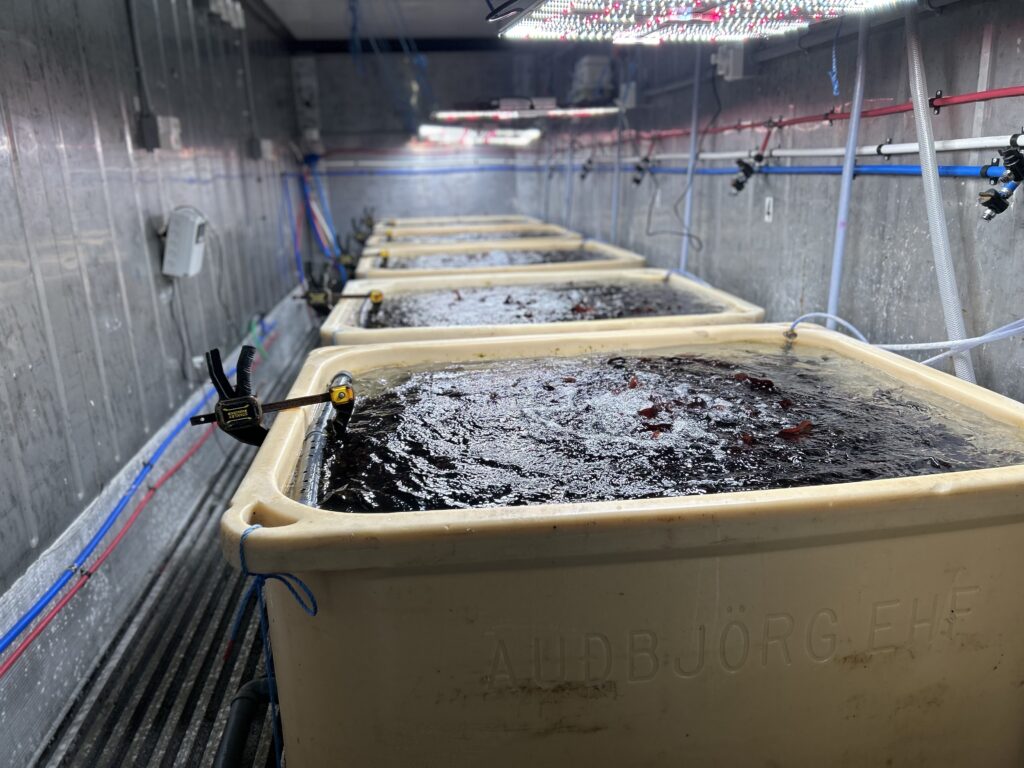
The results of the pilot cultivation are promising: dulse grows rapidly and consistently under these conditions, with growth rates up to three times higher than those reported in many other parts of the world where results on land-based dulse cultivation have been published.
Land-based cultivation of red seaweed in a circular economy linked to salmon farming
Lava Seaweed uses effluent water from fish farming for sustainable seaweed cultivation
In Þorlákshöfn, Lava Seaweed is developing a sustainable aquaculture operation in which effluent water from fish farming is used for land-based cultivation of red seaweed, dulse (Palmaria palmata). The project is based on circular economy principles, where resources are utilized and value is created from fish-farming effluent water.
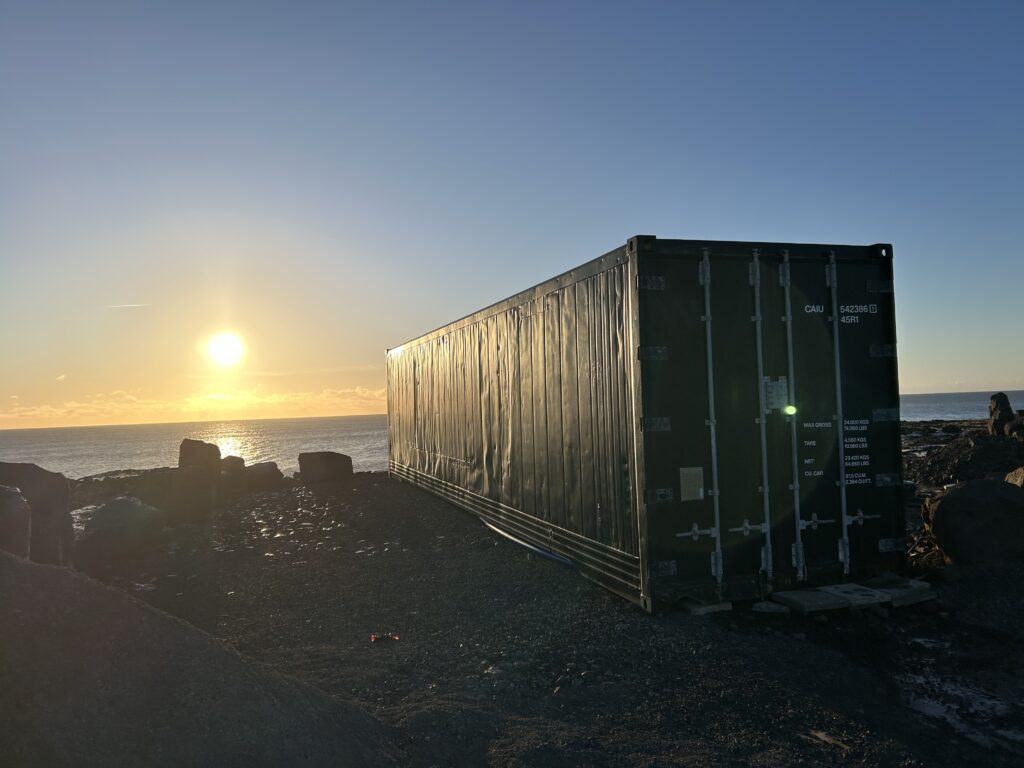
Lava Seaweed’s pilot cultivation is carried out in collaboration with the salmon farming company First Water. Lava Seaweed has facilities located on the fish farm site and uses the effluent water in its own production. This involves utilizing wastewater generated by the fish farming operation and diverting it into Lava Seaweed’s seaweed cultivation system.
The underlying concept is that Lava Seaweed is designing a red seaweed cultivation system that can utilize waste streams from other aquaculture operations and, through photosynthesis, bind carbon dioxide (CO₂) and dissolved “nutrients” present in effluent from salmon farming as inputs for the growth of dulse. This creates a form of symbiosis in a biological sense, or integrated multi-trophic aquaculture (IMTA), where the fish farm releases effluent water that would otherwise represent a cost or a challenge to manage, while the seaweed cultivation uses the same water as a resource for producing valuable products.
“The effluent water coming from First Water is full of nutrients that are no longer useful there – but for dulse, this is an excellent resource,” says Ástráður Sigurðsson, project manager at Lava Seaweed.
Production of high-value seaweed products with benefits for fish farming
Lava Seaweed’s activities are primarily focused on the production of high-value seaweed products. At the same time, benefits are created for fish farming, as the use of effluent water leads to a reduced environmental footprint and more efficient use of water resources.
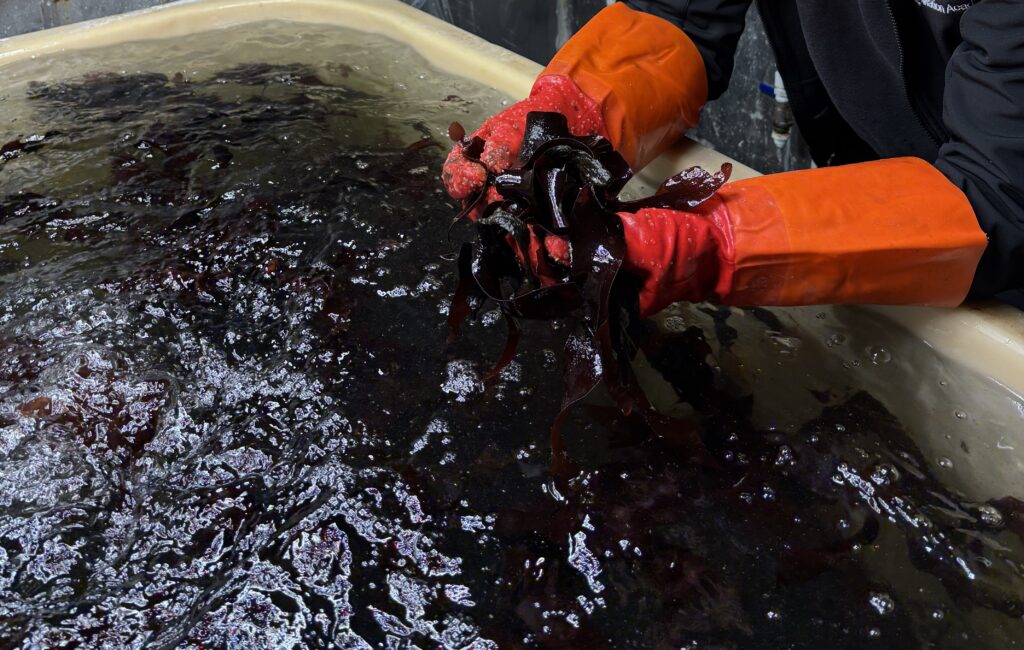
Currently, the cultivation of dulse takes place on a pilot scale in containers where conditions are controlled with regard to light, temperature, and water flow. The dulse absorbs dissolved nutrients from the water and thus functions as an organic biofilter that improves water quality. Through photosynthesis and the growth of the dulse, the water from the seaweed cultivation is cleaned, and the possibility of reusing this water again in salmon farming is being evaluated. From previous research conducted by the company, it is known that this works very well in co-cultivation with abalone, and initial results give strong indications that this could also be a viable option in land-based salmon farming.
“We measure the levels of dissolved substances in the water flow both in and out and see a clear difference. The dulse absorbs dissolved substances from the water and returns it much cleaner — this clearly demonstrates how this cultivation can function as a biofilter,” explains Ástráður.
Rapid growth and a scalable solution
Diverse applications and future opportunities
Dulse is already a high-value product, and Lava Seaweed has begun selling dried dulse in collaboration with Arctic Algae.
At the same time, research is being carried out in cooperation with Matís on nutritional value, vitamins, minerals, and potential further processing, including applications in pharmaceuticals and/or dietary supplements.
Dulse is a high-quality raw material, with low levels of heavy metals and no bacterial growth. It contains high levels of minerals, including iodine, vitamins (notably a high proportion of vitamin B12), and essential amino acids, and can therefore become an important ingredient for animal feed additives, dietary supplements, and with potential applications in the pharmaceutical sector.
At a time when fish consumption in Iceland has declined and traditional sources of iodine have decreased, dulse could become part of the solution while also helping to revive an old Icelandic food tradition.
Lava Seaweed has received grants from RANNÍS and the Environmental Fund for Marine Aquaculture, which have laid the foundation for the company’s research, alongside financial contributions and work input from the company’s owners.