

A new comparative report on the cost of raising children across Icelandic municipalities reveals that Ölfus has the lowest childcare and after-school costs among the 32 municipalities for which a complete comparison was possible. The findings highlight an important advantage for Ölfus as a place to live and could strengthen the ability of businesses to attract and retain employees as economic development and investment continue to expand in the municipality.
The report, Hvað kostar barn? (What Does It Cost to Raise a Child?), prepared by Aron Heiðar Steinsson of Steinsson Greykdal ehf. in August 2026, compares childcare fees, after-school programmes, sibling discounts and recreational activity grants across 36 Icelandic municipalities. The comparison is based on a family of four with two children: a three-year-old attending preschool for eight hours a day and an eight-year-old attending primary school and an after-school programme. Both parents are employed full-time. The results show that the annual cost of these services is approximately ISK 198,000 in Ölfus, compared with a median of ISK 566,000 across the municipalities. This represents an annual difference of approximately ISK 368,000.By comparison, the annual cost is approximately ISK 401,000 in Reykjavík, ISK 503,000 in Hafnarfjörður, ISK 652,000 in Árborg and ISK 806,000 in Kópavogur. The difference between Ölfus and the municipality with the highest costs exceeds ISK 617,000 per year.
Ölfus is experiencing significant industrial and economic development. New projects in manufacturing, food production, land-based aquaculture, data centres, innovation and services are creating opportunities for job growth and greater economic diversity. As this development continues, access to skilled employees and the ability to offer an attractive working environment will become increasingly important for businesses. The cost of living plays a significant role in this context. For families considering relocating closer to new employment opportunities, the cost of preschool, after-school programmes and other essential services can have a substantial impact on household disposable income. The report demonstrates that Ölfus has a distinct advantage in this respect. Lower childcare-related expenses can provide families with greater financial flexibility, making the municipality an attractive residential option for employees of companies already operating in Ölfus or planning to establish new facilities.
Companies investing in new operations must consider more than land availability, energy supply, transport connections and other infrastructure. Access to skilled labour and the opportunity for employees to establish family lives close to their workplaces are equally important factors in long-term business development. Affordable services for families with children can therefore contribute to the competitive advantages Ölfus offers businesses. This is particularly relevant for companies seeking specialised professionals and looking to attract individuals and families from other parts of Iceland or from abroad. When prospective employees consider where to settle, the overall picture matters: housing availability, transportation, education, recreational opportunities and everyday living expenses. Lower childcare-related costs can influence families' decisions about where to live and establish their long-term futures.
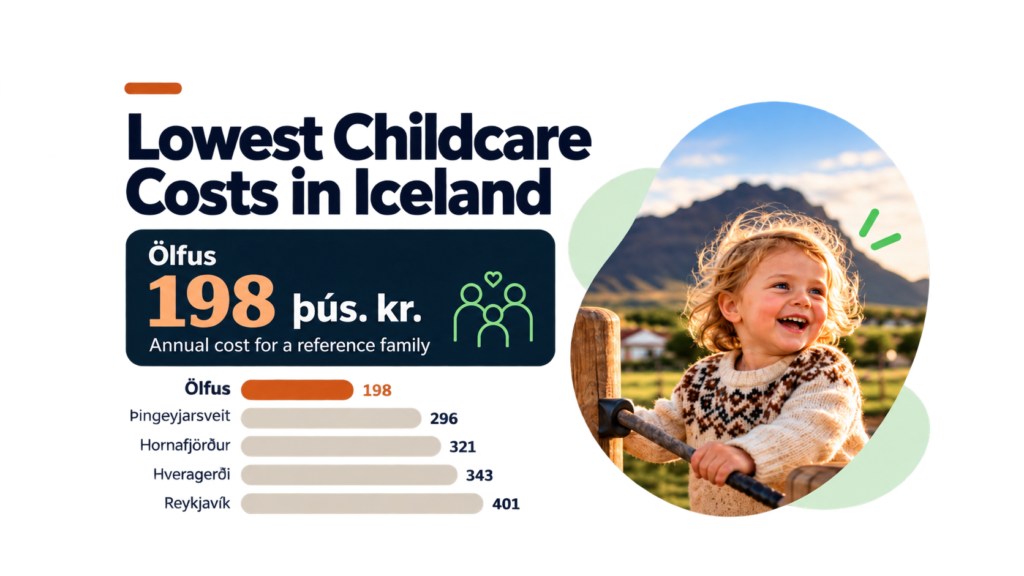
According to the report, Ölfus also offers the lowest preschool costs among the municipalities included in the comparison. Eight hours of daily preschool attendance, including meals, costs ISK 17,215 per month under the municipality's 2026 fee schedule. Since March 2026, the Municipality of Ölfus has offered up to 36 hours of free preschool attendance per week, regardless of parental income.In addition, the reference family benefits from sibling discounts and recreational activity grants, which further reduce its combined annual expenses. Together, these measures largely explain Ölfus's favourable position in the national comparison.
At Ölfus Cluster, economic growth and community development are viewed as closely connected priorities. A strong local economy depends not only on investment and new businesses but also on creating conditions that encourage people to live and work in the area. The report's findings are therefore particularly relevant to the ongoing development of Þorlákshöfn and the wider Ölfus municipality. They demonstrate measurable financial benefits for a specific type of family and provide companies with valuable information when promoting employment and residential opportunities in the area. Affordable childcare alone does not guarantee that families will relocate to the municipality. Housing availability, access to preschool places, service quality and transportation infrastructure are also important considerations. Nevertheless, for companies establishing or expanding operations in Ölfus, the results highlight a meaningful advantage in attracting new residents and building a sustainable local workforce.
The report Hvað kostar barn? (What Does It Cost to Raise a Child?) was prepared by Aron Heiðar Steinsson of Steinsson Greykdal ehf. and is based on publicly available municipal fee schedules as of 22 August 2026. The study covers 36 municipalities, with complete comparative results available for 32. The calculations are based on a specific family composition, defined childcare attendance hours and full utilisation of recreational activity grants. Actual costs may therefo vary between households. The report does not assess service quality, waiting lists or the availability of preschool places.
Commenting on the findings, Páll Marvin Jónsson, Managing Director of Ölfus Cluster, emphasises the importance of linking business development with attractive living conditions for employees and their families.
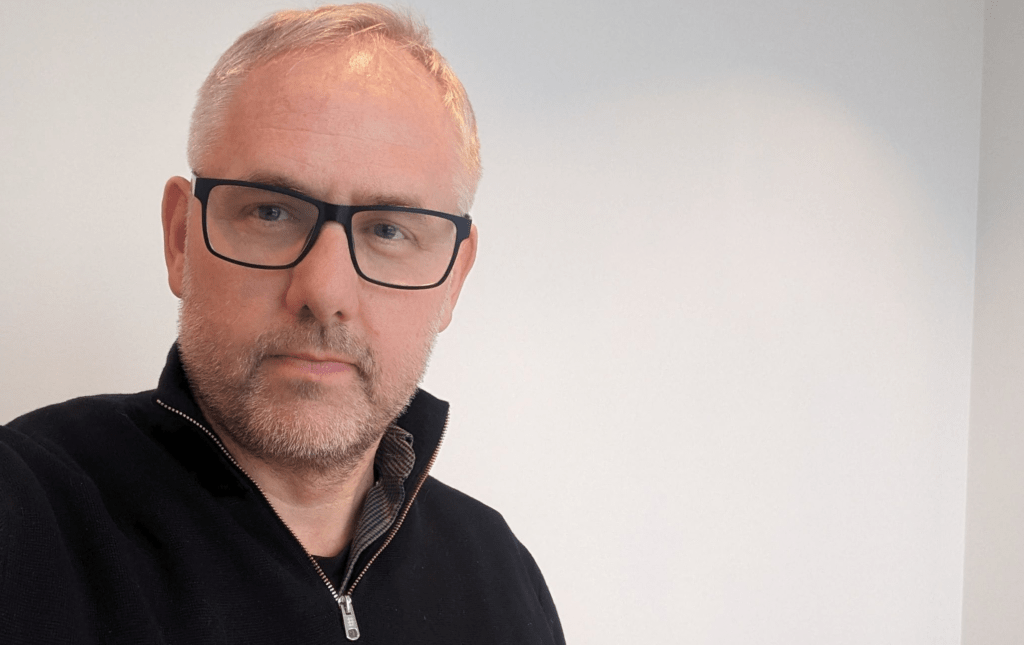
"When companies consider establishing operations in Ölfus, the decision is not simply about land, energy and infrastructure. It is equally important that employees and their families see Ölfus as an attractive and financially viable place to settle.These findings demonstrate that Ölfus has a significant advantage when it comes to the cost of services for families with children. This is a strength we should make better use of when presenting the municipality to businesses, investors and prospective employees."