
Sand Encroachment Shaped the Settlement and Landscape
This article was originally published on Vísir: https://www.visir.is/g/20262870539d/aratugalong-baratta-vid-sandfok-i-thorlakshofn
Land reclamation in Þorlákshöfn has a long and remarkable history. Over the centuries, large amounts of sand have been carried inland from the shore east of the settlement and from the mouth of the Ölfusá river. From there, the sand has continued to drift toward Selvogsheiði and as far west as Selvog. This development is described in a report by the Soil Conservation Service of Iceland on land restoration in Þorlákshöfn, outlining how sand movement has shaped the landscape of the area.
Rich fishing grounds lie off the coast, and the settlement in Þorlákshöfn developed around their utilization. However, sand drift from the shore and the Ölfusá estuary threatened the community, and it became clear early on that extensive land reclamation measures were needed to secure permanent habitation and economic activity in the area.
Grazing protection 1935 – The largest sand area fenced off
In 1935, the largest sandy area was fenced off and protected from livestock grazing. According to data from the Soil Conservation Service of Iceland, the fence extended from the Ölfusá river in the east to Nesviti lighthouse in Selvog in the west, a total length of approximately 22 km, enclosing about 7,800 hectares of land.
Since that time, systematic work on land reclamation has been carried out in Þorlákshöfn. Despite considerable success in recent decades, it is clear that continued efforts in revegetation and afforestation are needed to ensure long-term results.
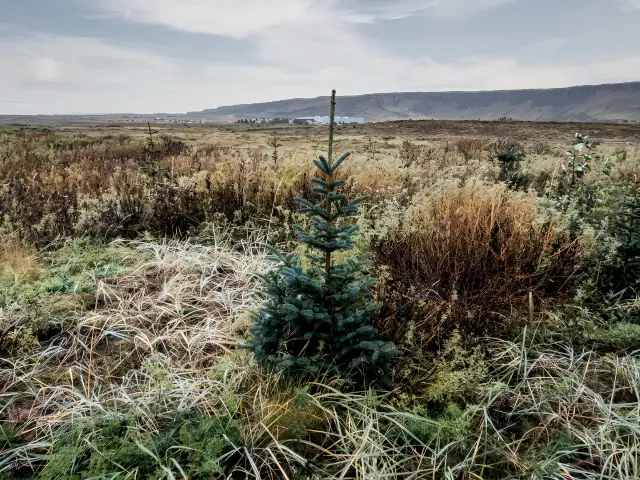
Figure 1. Young tree growing in land where vegetation has been established following reclamation.
Phases of land reclamation
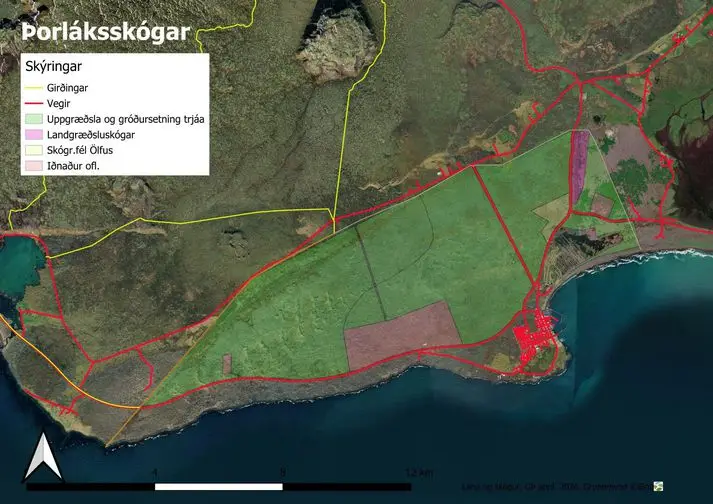
Figure 2. Overview map of Þorláksskógar and key land reclamation and land-use areas near Þorlákshöfn.
Phase 1 – Controlling Sand Drift East of the Town
The reclamation efforts can be divided into four phases. The first phase focused on restoring the area east of the settlement and reducing sand drift into the town. In 1952, sand barriers were constructed on the mudflats east of the settlement. Marram grass seeds were sown in the barriers and in the sand transported from the coast.
According to the Soil Conservation Service of Iceland, these measures were a key step in stopping sand drift from the shoreline. Sowing marram grass has long been one of the most important elements of land reclamation, as it thrives best where sand is highly mobile. It has played a key role in stabilizing sand and building up a permanent vegetation cover. Today, coastal and sand defense structures hold millions of cubic meters of sand in place. These measures were crucial for the development of the settlement in Þorlákshöfn. A notable example of this success is that areas once characterized by vast sandy wasteland are now used as a golf course.
Phase 2 – Building Vegetation Belts Around the Town
The second phase involved expanding the sand protection belt around the settlement. This was achieved through the sowing of marram grass and red fescue, as well as the distribution of synthetic fertilizer using tractors and aircraft. Organic fertilizer has also been applied in selected areas near the town.
Lupine was sown across large areas to strengthen the vegetation cover and support further ecological succession. Lupine has proven to be an effective nurse plant for other vegetation and tree seedlings across this extensive area. It has also created favorable conditions for insects, birds, and other wildlife. Over the years, numerous species of trees have been planted in the area, including in designated land reclamation forests. Associations, companies, and individuals have also participated in tree planting and other reclamation projects. There has consistently been close cooperation between the Municipality of Ölfus and Land and Forest (formerly the Soil Conservation Service) on land reclamation efforts in Þorlákshöfn.
Phase 3 – Revegetation Along the South Coast Road
The third phase focused on revegetation along the Suðurstrandarvegur road west of the settlement. The aim was to prevent sand from drifting onto the road and disrupting traffic. Synthetic fertilizer and grass seed were distributed over the area by aircraft, with the involvement of the Icelandic Road Administration.
Phase 4 – Þorláksskógar (2016)
The fourth phase began with the Þorláksskógar agreement in 2016. This marked the beginning of formal cooperation between the Municipality of Ölfus and Land and Forest, which merged the former Soil Conservation Service and the Icelandic Forest Service. The objectives of the cooperation include land restoration, afforestation, and ecosystem recovery, with the aim of increasing biodiversity while also improving the area for outdoor recreation for local residents.
To achieve these goals, Land and Forest has planted large quantities of tree seedlings and applied fertilizer to strengthen vegetation. Fertilizer has also been spread on degraded land to stabilize surface sand movement and support the growth of tree seedlings.
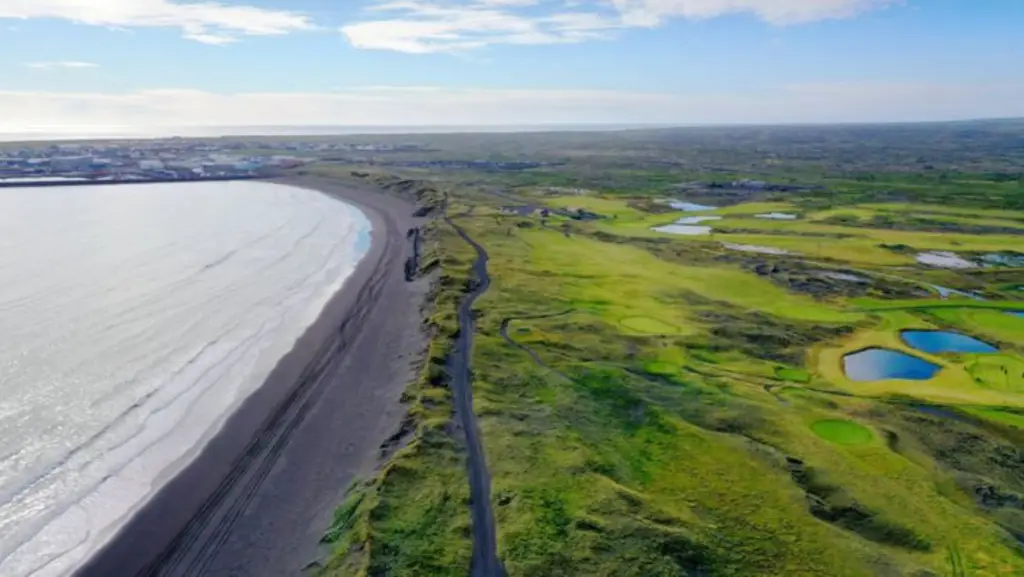
Figure 3. Golf course east of Þorlákshöfn, formerly an extensive sandy desert.
New Fertilization Policy - Increased Focus on Organic Fertilizer
In autumn 2025, Land and Forest adopted a policy placing increased emphasis on the use of organic fertilizer instead of synthetic fertilizer in all of the institution’s projects.
In recent years, there has been growing emphasis on the use of organic fertilizers in land reclamation and forestry. Organic fertilizers, such as meat meal and sludge from aquaculture, contain important nutrients that are well suited for building up soil and vegetation. Meat meal, for example, has proven effective in land reclamation, with effects lasting up to three years. This is a significant advantage in large areas where annual fertilization is difficult. Similar results can likely be achieved using aquaculture sludge, which contains nitrogen, phosphorus, and other elements that support vegetation growth and soil formation.
Unlike conventional synthetic fertilizers, nutrients from organic fertilizers are released more slowly and are therefore available to vegetation over a longer period. This reduces the risk of nutrients being leached into groundwater before plants can utilize them. Organic fertilizers also improve the soil itself by increasing organic matter, strengthening microbial life, and improving water retention. This is particularly important in sandy and degraded areas where soil is poor and contains little organic material, helping to establish a foundation for long-term soil formation.
The use of organic fertilizers also aligns well with the principles of a circular economy. By utilizing organic by-products from the local environment, such as from land-based aquaculture or food processing, materials that were previously considered waste can be transformed into valuable resources for ecosystem restoration. This approach can also reduce the carbon footprint of projects by decreasing the need for production and import of synthetic fertilizers.
Impact on Groundwater - Studies Indicate Low Risk of Nutrient Leaching
When using fertilizers for land reclamation, particular attention has been given to potential impacts on groundwater. Research and experience from Iceland indicate that such impacts are generally minimal, especially in erosion-prone areas where vegetation cover is being established.
A memorandum by Hreinn Óskarsson and Magnús H. Jóhannsson from 2019, prepared for the Municipality of Ölfus, states that nutrient leaching is generally low under Icelandic conditions and depends, among other factors, on soil type and vegetation cover. Similar conclusions are presented in a report by Andrés Arnalds for Reykjavík Energy, which indicates that the risk of nitrogen pollution in groundwater due to land reclamation is low. Nutrient leaching occurs when nutrients dissolve in water and move downward through the soil without being utilized by plants. Such issues are well known in other countries, particularly in areas with intensive and long-term fertilizer use. However, conditions in Iceland differ in many ways. Volcanic soils have a high capacity to bind nutrients, and research suggests that leaching is generally limited.
As vegetation cover becomes denser, leaching decreases further. Vegetation absorbs nutrients and acts as a natural filter, slowing water flow and binding substances in the soil. Thus, vegetation development is not only important for stopping sand drift and soil erosion, but also for supporting a healthier water cycle. Organic fertilizers offer certain advantages in this context. Because nutrients are released more slowly, the risk of leaching before plants can utilize them is reduced. Additionally, they increase organic matter in the soil, strengthen microbial life, and improve water retention, all of which contribute to better nutrient retention.
New opportunities - Land-Based Aquaculture and the Circular Economy
Aquaculture Creates New Resources for Land Reclamation
In the coming years, significant quantities of organic material will be generated in Þorlákshöfn in connection with the development of land-based aquaculture. It is important to explore ways to utilize these materials close to their source. Hafnarsandur is a large area of sparsely vegetated land that could be suitable for land reclamation using such resources.
One of the opportunities associated with the development of land-based aquaculture is the increased utilization of by-products generated during production. The Terraforming LIFE project, currently under development, aims to use organic waste from land-based aquaculture and agriculture to produce biofertilizer and biogas. This approach supports a circular economy in which nutrients and organic materials are reused rather than discarded as waste.
Terraforming LIFE – Waste Becomes Biofertilizer and Biogas
The project is based on collaboration between stakeholders in aquaculture, agriculture, and the innovation sector. Its goal is to develop solutions that reduce environmental impact, improve resource efficiency, and create new value from production by-products.
For Ölfus, such development can create new opportunities for value creation alongside the growth of land-based aquaculture, including the production of biofertilizer, energy generation from biogas, and the development of related services and knowledge-based activities.
Projects such as Terraforming LIFE can therefore become an important part of building a circular economy in the region and strengthening connections between aquaculture, agriculture, and green industrial development.
Future Vision
Sustainable Land Use and Continued Development
Work will continue in the coming years on land restoration and the development of the area, in line with goals of sustainable land use and increased biodiversity.
Progress of the Þorláksskógar project can be followed, and further information on its objectives and actions can be found on the Ölfus Cluster website: https://olfuscluster.is/thorlaksskogar/
Figure 4. Terraforming LIFE project logo
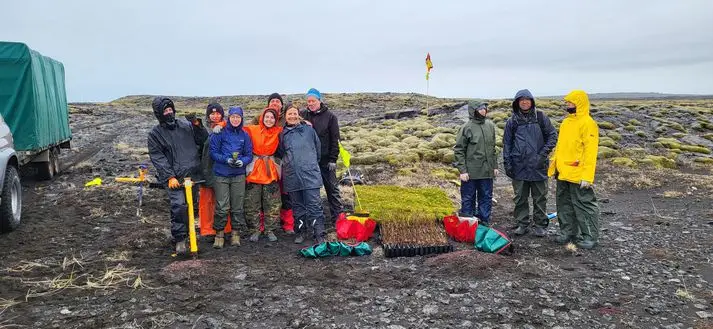
Figure 5. Tree planting in Þorláksskógar, a collaboration between Land and Forest and the Municipality of Ölfus.
Sources
This article is based on data from the Soil Conservation Service of Iceland and Land and Forest, including reports on land reclamation in Þorlákshöfn, land restoration plans, and studies on the development of sand, soil, and vegetation. It also draws on scientific memoranda on fertilizer use and nutrient leaching, as well as expert analyses on nitrogen pollution and the effects of organic fertilizers.
Information about Þorláksskógar and recent project developments comes from Ölfus Cluster and public partners. The sources reflect the interplay of research, experience, and policy work that has shaped land reclamation in Þorlákshöfn for nearly a century.
Authors (Þorláksskógar Project Steering Committee)
Garðar Þorfinnsson – Specialist, Land and Forest
Hreinn Óskarsson – Division Manager, Land and Forest
Eva Lind Guðmundsdóttir – Project Manager, Ölfus Cluster
Páll Marvin Jónsson – Managing Director, Ölfus Cluster
Davíð Halldórsson – Environmental Manager, Municipality of Ölfus